Shabby Chic Junk Journal Pages: Elevate Your Design Aesthetic
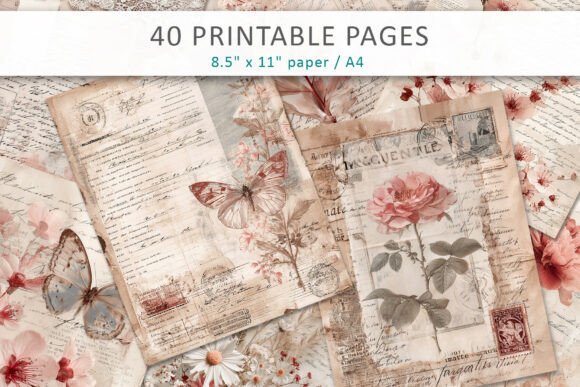
Imagine infusing your digital projects with the soft, romantic allure of a bygone era, where every texture tells a story and every faded hue evokes a sense of timeless elegance. This is the essence of the Shabby Chic Junk Journal Pages collection, a meticulously crafted set of 40 high-resolution JPG files designed to bring softness, romance, and vintage charm to a wide array of creative endeavors. For graphic designers and brand strategists seeking to differentiate their work, these pages offer a unique visual language that blends antique handwritten script, faded florals, textured paper layers, and delicate lace accents into a cohesive and emotionally resonant design asset.
Understanding the Value in Modern Design
In an era dominated by clean lines and minimalist aesthetics, the shabby chic style offers a compelling counterpoint that prioritizes warmth, personality, and tactile quality. From a professional design perspective, these pages are more than just pretty backgrounds; they are tools for crafting effective visual communication. The layered composition and vintage texture can significantly strengthen brand identity, particularly for businesses aiming to project values of authenticity, craftsmanship, or nostalgic comfort. This style excels in creating an immediate emotional connection, enhancing user engagement through its rich visual storytelling.
Practical Applications for Creative Professionals
The versatility of these assets allows for seamless integration into numerous projects, providing a consistent and high-quality aesthetic foundation.
- Branding and Logo Design: Use elements from the pages as subtle textures or background layers in brand marks or collateral to add depth and a handcrafted feel to a brand identity system.
- Marketing Materials: Create standout brochures, invitations, or promotional flyers that feel personally curated rather than mass-produced, improving the perceived value of your message.
- Social Media Content: Design cohesive and visually engaging Instagram stories, Facebook posts, or Pinterest graphics that stop the scroll with their unique, artistic quality.
- Web and UI Design: Apply these pages as hero backgrounds or section dividers on websites for boutiques, artisanal brands, or lifestyle blogs to enhance the user experience with a warm, inviting atmosphere.
- Editorial and Packaging Design: Elevate book covers, magazine layouts, or product packaging with textures that suggest quality and care, appealing to a discerning audience.
Tips for Effective Implementation
To maximize the impact of such distinct design elements, consider the following professional guidelines:
- Maintain Visual Hierarchy: Use the richly detailed pages as backgrounds or accent layers, but ensure your primary text and key messages are placed on cleaner areas or overlaid with semi-transparent panels for optimal readability.
- Ensure Brand Consistency: While the style is inherently eclectic, align the color palette of the pages with your broader brand colors. The muted tones of shabby chic often pair well with soft pastels, creams, and gentle metallics.
- Focus on Audience Alignment: This aesthetic resonates powerfully with audiences who appreciate tradition, romance, and artisanal quality. It may be less suitable for brands targeting a sleek, ultra-modern, or high-tech demographic.
- Think Beyond the Obvious: These pages can be cropped, manipulated, or used as masks to create unique patterns for merchandise, presentation slides, or digital product covers, showcasing their scalability.
Ultimately, the power of a resource like the Shabby Chic Junk Journal Pages lies in its ability to transform a standard project into a memorable experience. By thoughtfully incorporating such high-quality creative assets, designers can bridge the gap between digital efficiency and the human desire for beauty and narrative. This careful selection of visual elements does more than just decorate; it communicates a story, establishes a mood, and ultimately elevates both the aesthetics and the communicative power of your work, proving that in design, every detail contributes to the whole.